
Water damage restoration in Nashville requires a property-specific estimate. As a national reference, HomeAdvisor reports a typical range of $1,383 to $6,369 and an average of $3,868. These are national figures, not Nashville rates or a quote for your home. The affected materials, water source, access and repair scope determine what belongs in your estimate. See HomeAdvisor’s national cost guide
If a leak has just happened, focus on safety and stopping the source before comparing prices. Once you can arrange an assessment, ask for a written scope that separates water removal, drying and rebuilding. That makes competing estimates easier to understand.
How to use national restoration cost figures
A national range can help you start a budget conversation, but it cannot tell you whether a particular estimate is reasonable for your property. A single-room problem and water affecting multiple floors may require very different work. Some estimates cover emergency mitigation; others include the finish repairs that follow.
Use published figures as background. For a Nashville estimate, give the provider your property address, the affected rooms, when the damage appeared and the suspected source, if known. Ask what still needs inspection before the scope and price can be confirmed.
What affects a water damage estimate?
The area affected and the materials involved
The wet floor you can see may be only part of the assessment. Ask whether the estimate addresses affected walls, ceilings, insulation, flooring and nearby rooms. A room’s floor area alone does not describe everything a provider may need to inspect or restore.
Request a room-by-room explanation. For each material, ask whether the proposal includes drying, removal, replacement or further evaluation. This is more informative than a single total labeled water damage cleanup.
The source of the water and the cleanup required
A supply-line leak and sewage entering a room require different cleanup decisions. Tell the provider what happened without trying to classify the water yourself. Ask how the identified source changes the proposed work, handling of damaged items and material-removal decisions.
If you do not know the source, say so. A good estimate should identify its assumptions and explain what happens if the inspection reveals conditions that change the scope.
Access and the drying plan
Work behind a wall, beneath flooring or in a hard-to-reach space may involve access and restoration of that access area. Ask which opening or removal work is included and what evidence supports it.
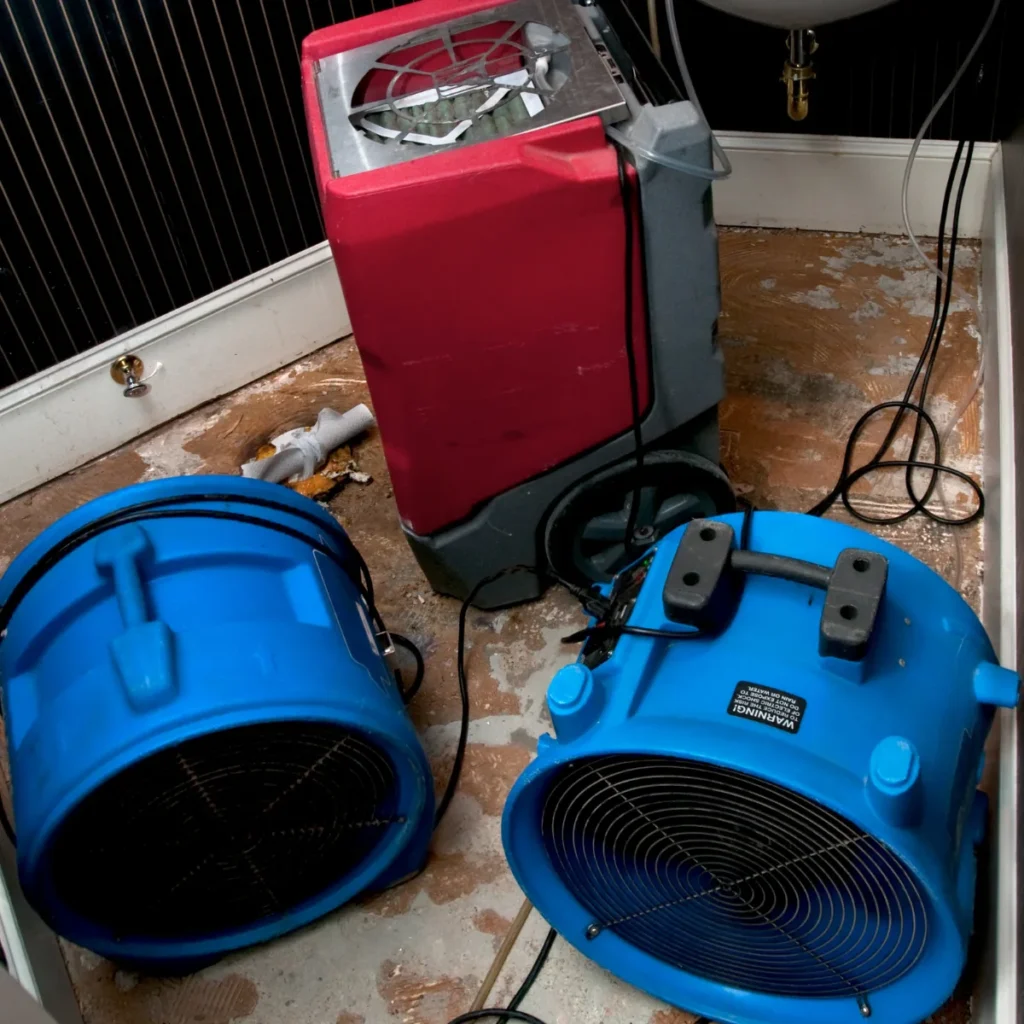
For drying equipment, request the proposed equipment, the billing basis and how drying progress will be checked. Ask how added equipment or extra days would be authorized. A fixed number of days should not substitute for an explanation of completion criteria.
Repairs after mitigation
Water removal and drying do not automatically include new drywall, trim, flooring or paint. Ask whether rebuilding is part of the same agreement, a separate estimate or another contractor’s work. Include both phases when considering the total project budget.
What an itemized estimate should explain
Before comparing totals, look for these details in writing:
- Affected rooms and materials, with the proposed work for each.
- Inspection, water extraction and drying tasks that are included.
- Equipment quantities, rates, billing period and progress checks.
- Any material removal, disposal or specialized cleaning.
- Access work and the repairs needed to close those areas.
- Finish repairs, reconstruction and any explicit exclusions.
- Emergency, travel or after-hours fees, if applicable.
- Payment terms and how changes to the scope require your approval.
Not every job needs every item. The purpose is to understand what you are agreeing to and what might be billed separately. Ask the provider to explain unclear descriptions before you sign.
How to compare Nashville restoration estimates
First compare the proposed work. Two prices cannot be meaningfully compared if one includes drywall replacement and painting while the other stops after drying. Put the estimates beside each other and mark which tasks are included, excluded or uncertain.
Then ask each provider the same questions: What findings support this scope? What is the equipment billing basis? What is the plan for checking progress? What would trigger a change? Who handles repairs after drying? Request clarification in writing so the answers remain part of the project record.
For a Nashville rental, tell your landlord or property manager about the damage and confirm who can authorize work. Keep photos and communications. For a business property, identify the person who can approve the estimate and discuss access or operating restrictions with the provider.
Keep source repair and insurance questions separate
Confirm who will repair the cause of the damage. A plumber may need to fix a leaking pipe, while a restoration provider handles the affected materials. Ask whether the source repair is included in either agreement so it does not fall between two scopes.
If you plan to make an insurance claim, ask your insurer about the documentation, policy terms and claim process that apply to your loss. An estimate is not a coverage decision. Keep copies of the scope, photos, invoices and any approved changes; the provider and insurer should explain their respective roles.
Water damage restoration cost FAQs
How much does water damage restoration cost in Nashville?
You need an assessment and written scope for a Nashville price. HomeAdvisor’s national benchmark is $1,383 to $6,369, averaging $3,868. It is a starting reference, not a local price range, guaranteed total or offer from Property Water Damage.
What does water damage restoration include?
Depending on the findings, a proposal may include assessment, extraction, drying, material removal and cleaning. Reconstruction may be separate. Ask the provider to identify the included tasks and exclusions rather than assuming the word restoration covers every repair.
Are drying equipment charges included in the estimate?
They should be addressed if equipment is part of the proposed work. Ask for the quantity, rate, billing period and plan for progress checks. Confirm how any added equipment or extended use will be documented and approved.
Are ceiling repairs or painting included
Only if they appear in the agreed scope. Drying a ceiling and replacing or refinishing it are different tasks. Request a separate explanation of the repairs so the overall project budget is clear.
Can I get an itemized estimate?
Ask the provider for a written breakdown before authorizing work. It should explain the affected areas, proposed tasks, rates or billing basis, exclusions and process for changes. Clarify any inspection fee before the appointment.
Request water damage help in Nashville
Use our Nashville water damage referral guide to understand the intake process.
To request water damage help in Nashville, call Property Water Damage at 931-645-1285. The line accepts calls 24/7 and routes requests to local water damage providers. Describe the affected rooms, timing and suspected source so the provider can discuss the next step.
Property Water Damage is an independent referral and dispatch service. Local providers perform the assessment and restoration work and confirm availability, arrival timing, scope and pricing. Request your estimate from the provider performing the work.