
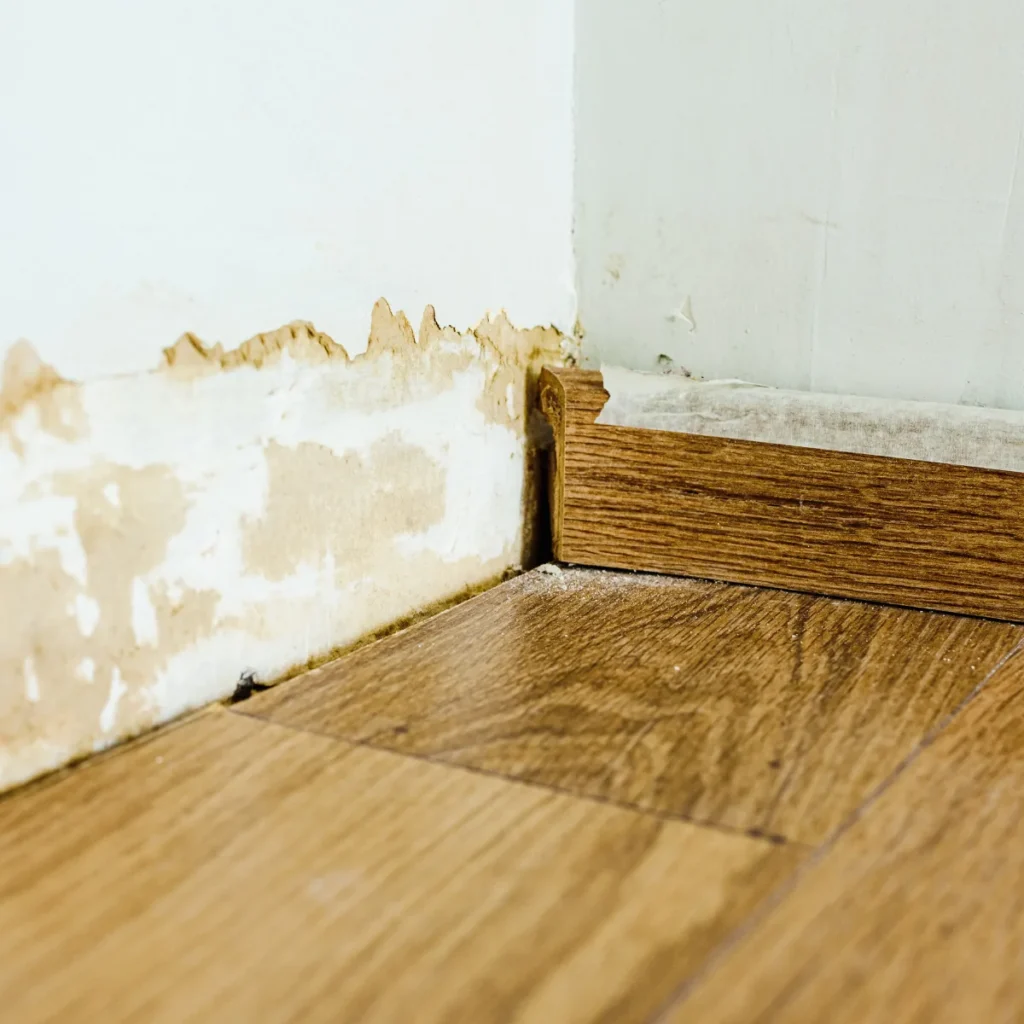
Wet drywall does not always need to be replaced. Some drywall affected by clean water may be dried in place if it has not swollen and its seams remain intact. Drywall exposed to sewage or floodwater should be replaced. The water source, material condition and ability to dry the wall cavity matter more than whether the painted surface feels dry.
For a Clarksville homeowner or renter, the next step is an assessment that explains both the panel’s condition and what happened behind it. Drying the surface, repairing the leak and deciding whether to keep the drywall are separate questions.
When wet drywall may be saved
EPA clean-water guidance allows drying drywall in place when there is no obvious swelling and the seams are intact. It also calls for ventilation of the wall cavity. This guidance is a starting point for assessment; it is not permission to keep any panel that looks normal. Read the EPA’s clean-water material guidance
Ask the provider how they will assess the affected panel, the cavity and any insulation. If they recommend keeping drywall, request an explanation of the drying plan and how they will decide that the work is complete. The plan should address the area behind the finish as well as what is visible.
When replacement is the appropriate path
Sewage or floodwater exposure
The Gypsum Association states that gypsum panels exposed to sewage or floodwater must be replaced. Do not treat contaminated-water damage as a routine paint repair. Read our flood water damage guide. Tell the provider about the source and keep people and pets away from the affected area. See the Gypsum Association’s flood-damage guidance
Swelling or damage to the panel and seams
Visible swelling or damaged seams changes the decision. EPA guidance calls for removal when those conditions prevent drying in place. Ask the assessor to show you the affected area and explain the proposed removal boundary. Do not assume every job requires the same cut height.
A sagging ceiling also raises a safety concern. Keep clear of it and arrange professional help rather than pressing, puncturing or opening it yourself. Australian Red Cross recovery guidance identifies sagging ceilings as a possible sign of water above and advises leaving the building. Read the structural safety guidance
Conditions that need further investigation
Sometimes the right decision is to investigate before choosing either drying or replacement. If the source is unknown, the wall has repeatedly become wet, or the exposure history is unclear, explain that history to the provider. Ask what additional evidence they need before making a recommendation.
If there is visible growth or an unexplained musty odor, request an assessment of the affected materials. Avoid cutting into a suspected problem area just to see what is behind it. The scope should explain any controlled access or removal work the provider proposes.
Why the wall cavity and insulation matter
A repair decision should account for more than the drywall face. Ask whether insulation or other concealed materials were exposed, whether they need further evaluation, and how the provider will document their condition.
For example, if a pipe behind a Clarksville bathroom wall leaked, a plumber’s source repair does not answer whether the adjacent drywall should stay. Our burst pipe and leak damage guide explains the difference between source repair and restoration. Ask who will assess the affected wall assembly and who will complete the drying or material replacement.
A useful written scope names each phase: source repair, assessment, access or removal if needed, drying checks, and finish restoration. Keep those responsibilities clear if different contractors are involved.
What a moisture meter can and cannot tell you
Moisture readings can help identify areas that need investigation, but a number alone does not decide whether drywall can be retained. The Gypsum Association says there is no industry-standard acceptable free-moisture level for wallboard. Ask which instrument and scale were used and how the result informed the recommendation.
If someone quotes a percentage, ask what that percentage represents. A generic rule such as replace every panel over 15 percent does not explain the instrument, material or inspection context. Request the findings that support the drying or removal decision.
Thermal imaging may guide the search for possible moisture by identifying temperature patterns. FLIR pairs that approach with moisture-meter confirmation. A thermal image alone is not evidence that an entire wall cavity is dry. Learn about moisture inspection tools
What to do before a drywall assessment
From a safe location, take photos showing the affected wall or ceiling and the surrounding room. Note when the water appeared, whether it is still entering, and any repairs already made. Do not open the wall, touch wet electrical components, or use a household fan where contamination is suspected.
If you rent in Clarksville, notify your landlord or property manager and ask who will arrange the inspection and authorize repairs. Give them the observations and photos rather than a diagnosis. For an owned property, gather previous leak and repair records if they are available.
Use these questions when speaking with the provider:
- What is known about the water source and exposure history
- Which panels, seams and concealed materials were assessed
- What supports drying in place or removing this particular area
- How will drying progress and completion be documented
- Who repairs the source and who handles drywall finishing
- What is included in the written scope and what is excluded
Wet drywall FAQs
How wet can drywall get before it needs replacement?
There is no useful one-number answer for every wall. Ask about the water source, swelling, seam condition and drying access. A provider should explain the recommendation for the actual material and exposure rather than relying on a surface touch test.
What does water damage behind drywall look like
Changes to the visible finish may prompt an inspection, but they cannot show the full condition behind it. The EPA notes that mold can be hidden on the back of drywall and in concealed spaces. Share the moisture history and ask what needs assessment. Read the EPA’s hidden-moisture and mold guidance
Is 15 percent moisture in drywall considered bad?
Not without understanding the instrument and scale. The Gypsum Association does not identify a universal acceptable free-moisture threshold for wallboard. Ask the provider to explain the reading and the other findings supporting the repair decision.
How long does it take mold to grow on wet drywall?
There is no reliable countdown for an individual panel. The EPA recommends promptly drying water-damaged materials within 24–48 hours to help reduce mold risk. That prevention goal does not establish whether hidden growth is present or whether a particular wall can be saved.
Can I paint over drywall after it feels dry
Wait until the cause is addressed and the material’s condition has been assessed. Ask for confirmation that the drying or replacement work is complete before finishing. Paint should be the final repair step, not the way you decide the problem is resolved.
Request water damage help in Clarksville
Use our Clarksville water damage referral guide to understand the intake process.
For help with wet drywall or suspected water damage in Clarksville, call Property Water Damage at 931-645-1285. Calls are accepted 24/7 and routed to local water damage service providers. Describe the affected room, the water source if known, and when the damage appeared.
Property Water Damage is an independent referral and dispatch service. Local providers perform the inspection and restoration work and confirm availability, arrival timing, scope and pricing.