
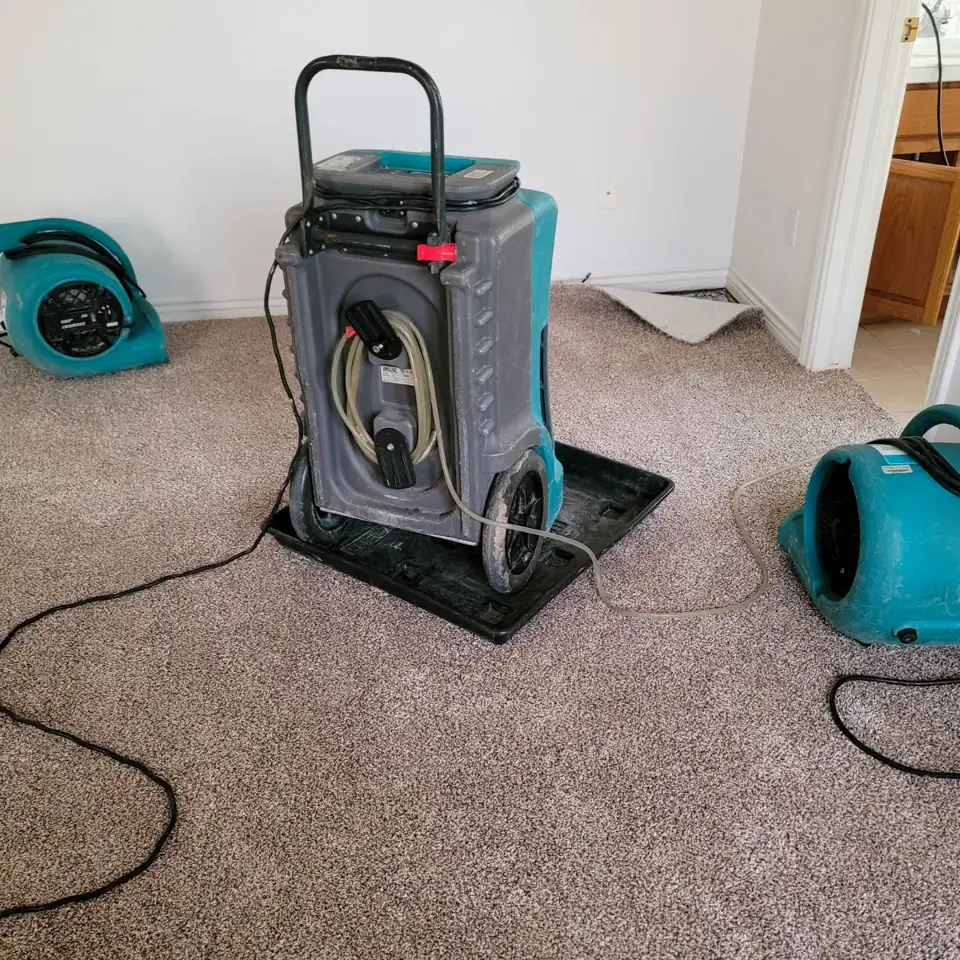
Water damage drying time in a Clarksville home needs a property-specific assessment. A fixed three-day promise or a dry-looking surface does not show that every affected material is ready for repairs. Ask the provider what it is drying, how progress will be checked, and what findings will support removing equipment and restoring finishes.
Ask what the drying estimate covers
Before discussing days, confirm the scope. Is the estimate for visible water removal, drying affected materials, or the whole project including rebuilding? Those are different milestones. A clear timeline identifies which milestone is being estimated and what still needs investigation.
Ask whether the source has been repaired and whether water is still entering. Tell the provider when you first noticed the damage and what work has already occurred. If the duration of a hidden leak is unknown, make that uncertainty part of the assessment rather than guessing a start time.
For a Clarksville rental, notify the property manager and confirm who will coordinate access for progress checks. If the property will be vacant during work, agree on how updates will be delivered and who can approve changes. A practical access plan helps keep the assessment and follow-up organized.
Distinguish urgency from a guaranteed drying deadline
EPA recommends acting promptly on wet materials and gives a 24–48-hour prevention goal to reduce the likelihood of mold growth. That is a reason to start addressing moisture quickly. It is not a promise that every water-damaged home, material or concealed space will be dry within that window. Read EPA’s moisture-control guidance
Ask the provider to explain the current findings and what could change its estimate. Keep the anticipated equipment period separate from a commitment that all reconstruction will be finished by the same date. If progress is slower than expected, request the reason and the revised plan in writing.
Clarify which materials and spaces are included
Visible rooms and concealed areas
Ask whether the assessment addresses flooring, wall bases, ceilings and adjacent areas relevant to the loss. If access behind a finish is proposed, request an explanation of why it is needed and who will restore that opening afterward. You should be able to connect each proposed task to a finding.
Do not open walls or remove flooring just to check for moisture yourself. Tell the assessor about stains, changes to finishes, odors or earlier leaks. Ask which observations need further investigation and what can be established without destructive access.
Materials proposed for retention or removal
Have the provider identify what it proposes to dry in place, remove or evaluate further. Ask for the reasoning for each decision. A timeline is more useful when it states what is actually being dried and what work is excluded.
If the assessment changes after an area is opened, request the updated findings and scope. Confirm the effect on equipment use, charges and follow-up visits. Keep the original estimate so you can see which assumptions changed instead of treating an extension as an unexplained delay.
Use progress evidence rather than a surface touch test
EPA describes moisture meters as tools for finding wet areas and monitoring drying in building materials. Ask the provider which materials and locations it will check, how readings will be recorded, and what comparisons or criteria it uses. A moisture reading needs an explanation of the instrument, material and purpose. See EPA’s moisture-meter guidance
Request an update that names the areas assessed and the next decision. For example, ask whether the current plan is to continue drying, investigate another location or prepare for repair. These are questions for the provider; they are not a reason to interpret a meter scale yourself.
At completion, ask for a written explanation of what was checked and any remaining limitations. Keep it with the source-repair record and the reconstruction scope. If another contractor will install finishes, ask how that contractor will receive the completion information.
Ask before changing equipment or ventilation
Do not disconnect or reposition hired drying equipment without discussing it with the provider. If noise, access or a practical concern makes the current arrangement difficult, report it and request an adjustment. Ask how the alternative affects the plan and billing.
If sewage or another contamination is suspected, explain that before starting household fans. EPA says fans should not be used until water is determined to be clean or sanitary. Equipment choices should follow the assessed conditions. Read EPA’s precautions for contaminated water
Also ask whether opening windows is appropriate for the current drying plan. Avoid treating a general ventilation tip as a substitute for the provider’s findings. Keep the focus on the affected materials and documented progress rather than whether the room feels more comfortable.
A checklist for drying updates and equipment removal
- Which affected materials and locations were checked?
- What changed since the previous assessment?
- What findings support continuing or completing drying?
- Is the water source repaired, or is another visit needed?
- What equipment period and charges are now anticipated?
- What remains to be done before finishes are restored?
Use the same questions at the start, during progress updates and before the final handoff. Consistent questions make changes easier to understand. Ask the provider to explain any unanswered item instead of filling the gap with a generic online timeline.
Water damage drying time FAQs
How long does water damage typically take to dry?
Request an estimate based on the assessed property and the specific materials in scope. Ask how the provider will check progress and define completion. This article does not establish a fixed number of days for your home.
How long should a dehumidifier run after water damage?
Ask the provider what findings will determine the equipment period and when it will reassess the area. Clarify the billing terms and any approval required for additional days. Do not remove equipment solely because a calendar target has passed.
Will water damage always cause mold?
Not every water event establishes a mold problem. EPA emphasizes prompt moisture control to reduce risk. Tell the assessor about the history and any visible growth or odors, and ask what requires investigation. A drying deadline cannot diagnose mold.
What is the fastest way to dry a flooded basement?
Arrange a safe assessment and a plan addressing the affected areas and water source. Report electrical or contamination concerns before using equipment. Speed alone is an incomplete goal if the work leaves an unresolved source or unchecked materials.
Can painting start when a wall feels dry?
Ask for the provider’s completion findings before restoring finishes. Clarify whether the material has been assessed and whether other work remains. A surface touch test does not explain the condition of the whole affected area.
Request a water damage drying assessment in Clarksville
Our Clarksville water damage referral guide explains how to request help. You can also review the water removal and drying guide and wet drywall replacement guide.
For help with water damage in Clarksville, call Property Water Damage at 931-645-1285. Calls are accepted 24/7 and routed to local water damage providers. Describe the affected rooms, when the damage appeared, and whether the source has been repaired.
Property Water Damage is an independent referral and dispatch service. Local providers perform the assessment and restoration work and confirm availability, arrival timing, scope and pricing. Ask the provider to explain its drying estimate, progress checks and repair handoff.