
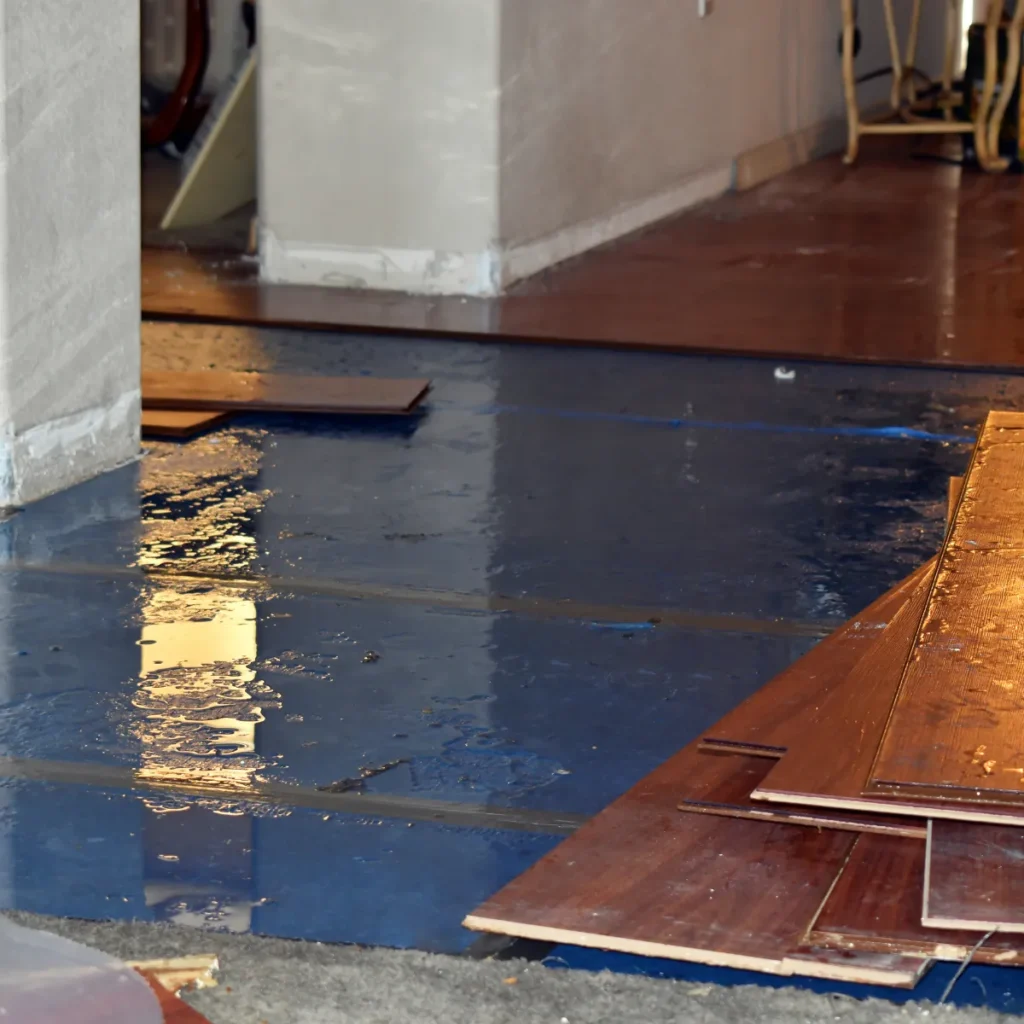
Water-damaged laminate flooring needs two separate decisions: what to do about the visible planks, and what to do about any moisture underneath. A replacement plank may address appearance while leaving unanswered questions about the underlayment or subfloor. In your Clarksville home, begin with the leak source and an assessment before choosing a cosmetic repair.
There is no useful blanket promise that every wet laminate floor can be saved or that every spill requires full replacement. The exact flooring product, condition, affected layers and manufacturer’s instructions matter. A photograph or a surface that feels dry cannot settle all of those questions.
Stop the source and document the affected flooring
Keep clear of standing water near outlets or electrical equipment, and avoid walking across damaged or uneven flooring to investigate. Arrange help with an uncontrolled leak. If you rent, report the issue to the property manager and confirm who will authorize assessment and repairs.
From a safe position, photograph the whole affected room and closer views of visible changes. Record when water was discovered, what source is known and which adjoining areas appear affected. Describe uncertainty honestly. “Leak first noticed this morning” is different from “floor wet for two hours” when no one saw when it started.
Save the flooring receipt, product label, installation record or spare-plank packaging if available. These can help establish whether the floor is laminate and identify the exact product. Do not assume that a wood-look floor is laminate; vinyl and hardwood require their own product guidance.
What visible laminate damage can and cannot show
Swelling, separated joints and changes in level
Record raised edges, separated joints, changes in level or damaged surface areas without forcing the boards flat. Those observations help describe the condition to a flooring professional. They do not establish the cause, the condition of concealed materials or how many boards need replacement.
Avoid sanding, ironing, applying filler or cutting out a plank as a first response to water damage. A finish repair can make the original condition harder to assess. Ask the flooring professional which repair options apply to the identified product after the moisture issue has been investigated.
Water beneath the surface, underlayment and subfloor
EPA guidance for clean-water damage emphasizes drying the subfloor beneath affected flooring. Its assessment guidance also explains that moisture meters can help locate wet areas and monitor drying. Ask how the provider will evaluate the layers in your particular floor, including areas that cannot be checked from above.
Sources: EPA drying guidance and moisture-assessment guidance.
Request a clear explanation of what was checked, what remains inaccessible and whether additional assessment is proposed. A room-level statement such as “the floor is dry” should be explained in terms of the actual materials and locations assessed.
Drying assessment versus replacing damaged planks
Check the exact manufacturer’s product guidance
Pergo’s care guidance distinguishes small cosmetic repairs from larger damage that may require professional plank replacement. That distinction is useful, but it is not a diagnosis of your floor. Ask the installer or retailer for the care and repair instructions that match the exact product you own.
Source: Pergo flooring care and repair guidance.
Keep marketing descriptions such as “water resistant” separate from a decision about this incident. Obtain the relevant product documents and ask how the reported exposure and visible condition affect the proposed work. Do not assume that a warranty pays for water damage or that all products sold under one brand have identical terms.
Coordinate access, drying and flooring installation
Ask the restoration and flooring providers to agree on the sequence before new planks are installed. Who decides whether material must be lifted for assessment? Who records findings underneath? Who explains whether existing planks are suitable for reuse? Who confirms the installation surface is ready for the proposed floor?
Also discuss the practical boundaries of replacement. Can matching planks be identified? Is the proposed work limited to one area or does it involve transitions into another room? Ask for a written explanation of those choices rather than accepting a whole-room replacement recommendation without its basis.
You do not need to become a flooring specialist to organize this conversation. You need the exact product, the assessment findings and a clear division of responsibilities. Keep moisture work, damaged-plank decisions and finish installation visible as separate parts of the scope.
Six questions for restoration and flooring providers
- What is the exact flooring product, and which manufacturer instructions apply?
- Which planks, underlayment and subfloor areas have been assessed?
- What is still concealed or uncertain, and what additional access is proposed?
- What supports the recommendation to retain, repair or replace each affected material?
- Who will confirm readiness before flooring is reinstalled, and how will that be recorded?
- What does the written scope include for matching planks, transitions, disposal and finish repairs?
Share the answers between providers. If the source of the water changes during the investigation, ask whether the assessment or handling plan needs to change too. EPA’s clean-water drying guidance should not be treated as a cleanup plan for sewage or other contaminated water.
Before approving flooring work, request a handoff note that identifies the source repair, the assessed areas, unresolved limitations and the next responsible party. Keep that note with the product information and photographs. It gives the installer a clearer starting point and helps you compare the final work with the agreed scope.
Water-damaged laminate FAQs
Can you reverse water damage on laminate flooring?
Do not count on a cosmetic treatment to reverse the condition. A flooring professional should evaluate the identified product and visible damage alongside the moisture assessment. Some incidents require replacement of affected material; the extent needs an explanation.
Is laminate flooring ruined if it gets wet?
A wet floor does not provide enough information for a universal verdict. Establish the product, source, affected layers and condition. Ask the provider to explain the evidence behind a retain-or-replace recommendation.
How do you repair laminate flooring after water damage?
Start with source control and assessment, then follow product-specific repair guidance. Agree on any required access or drying work before authorizing plank repairs or installation. Avoid copying cutting instructions meant for a different floor.
Can damaged laminate be fixed without replacing it?
That depends on the type and extent of damage and the product’s repair guidance. A small cosmetic defect is a different question from water affecting the flooring assembly. Request an assessment before selecting a surface repair.
Does a dry surface mean the subfloor is dry?
It does not establish the condition of concealed layers. Ask which materials were assessed, where measurements were taken and what limitations remain. A replacement decision should account for those findings.
Related local water-damage guides
Request water damage help in Clarksville
Call 931-645-1285 to request a water-damage provider referral for your Clarksville property. Explain the water source if known, visible flooring changes and affected rooms. Property Water Damage is an independent referral and dispatch service. The provider performing the work confirms availability, arrival, assessment, scope and pricing. Flooring installation or source repair may require a separate provider.