
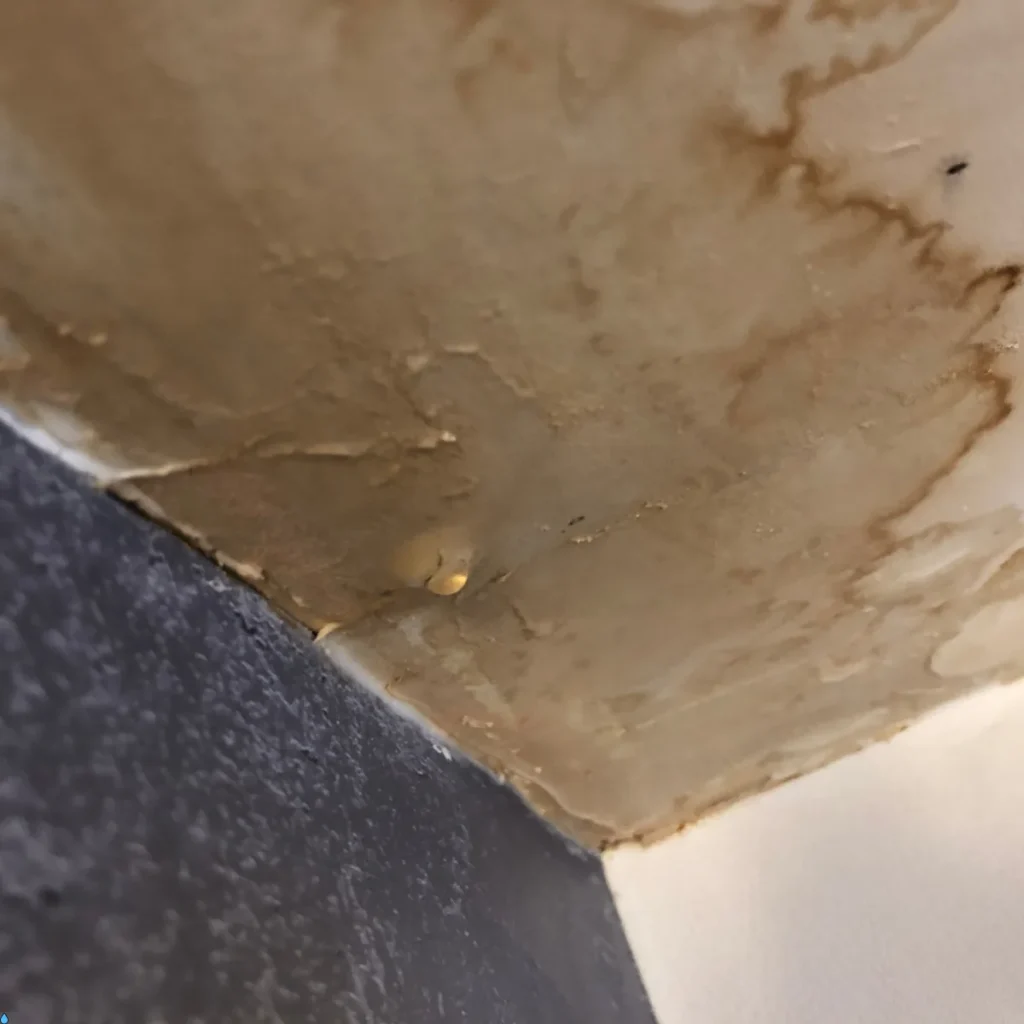
A water stain on your ceiling that feels dry can be the mark of an old leak, an intermittent leak, or condensation that has evaporated. Dry paint does not confirm that the ceiling cavity is dry or that the source is fixed. Before repainting, look for changes, document the stain, and decide whether source repair or a moisture assessment is needed.
For a Clarksville homeowner or renter, the practical question is what to do next. A small, unchanged stain and a ceiling that is beginning to sag require very different responses.
What a dry ceiling stain can mean
An old leak or moisture that comes and goes
A stain may remain after a plumbing or roof problem has been repaired. Ask whether anyone documented the repair and checked the affected materials. A remembered repair is useful context; it does not establish the condition of every concealed surface.
An intermittent problem can also leave a dry stain between episodes. Notice whether the mark changes after rain, a shower upstairs, or use of a nearby appliance. These patterns help a professional choose where to investigate. They do not identify the source on their own.
Write down the room above the stain, if there is one. A first-floor ceiling beneath a bathroom presents a different inspection path from a top-floor ceiling beneath an attic. Do not assume the water entered directly above the visible mark.
Condensation or an HVAC drain issue
Moisture may also be related to condensation or HVAC drainage. A mark near equipment or ductwork is a reason to ask an HVAC technician to inspect those components. It is not enough evidence to conclude that the problem is harmless humidity.
Avoid diagnosing the cause by the stain’s shape, color or edge alone. Brown discoloration tells you that the finish changed; it cannot establish when moisture arrived or whether the surrounding materials are sound.
When a ceiling stain needs urgent attention
Leave an area with a sagging or visibly unstable ceiling and seek professional help. Do not press on it, cut into it, or attempt to drain it yourself. Australian Red Cross disaster-recovery guidance treats a sagging ceiling as a warning of possible water above it and advises leaving the building. Read the structural safety guidance
Keep away from water around lights, outlets or electrical equipment. Do not touch wet electrical components or cross standing water to reach a breaker. The National Weather Service warns against entering rooms with submerged outlets or cords. See flood and electrical safety guidance
A stain that grows, becomes wet again, or is accompanied by an unexplained odor deserves prompt investigation. If there is immediate danger, move to safety and contact emergency services. A restoration referral line is for arranging property-damage help.
What to check safely before calling
Compare photos and note the timing
From a safe location, take one photo of the whole ceiling and another of the stain. Keep the original images so you can compare them later. Record when you first noticed it and whether you recently had a leak, repair, rain event, or change in appliance use.
Gather these details without opening the ceiling or entering an unsafe attic:
- Whether the mark has changed in size or appearance.
- What room or space is above it.
- Whether there is active dripping, damage to nearby finishes, or an unusual odor.
- Any previous plumbing, roofing or HVAC repair related to the area.
If you rent in Clarksville, send the photos and observations to your landlord or property manager and ask who will arrange the inspection. Describe what you see rather than naming a cause you have not confirmed.
Why a moisture assessment beats a touch test
A dry surface is only one observation. A professional may compare moisture readings across affected and unaffected areas and decide whether further access is needed. Ask what was measured, where, and what the results mean for the particular material.
Thermal imaging can help locate temperature patterns associated with possible moisture, but it does not see through the ceiling or prove a leak by itself. FLIR describes using thermal imaging to guide an inspection and a moisture meter to confirm suspected areas. Learn how moisture inspection tools work
Should you call a plumber, roofer or restoration provider?
Choose help based on the problem being investigated:
- Plumber: suspected supply-pipe, drain, bathroom or appliance connection leak. See our burst pipe and leak damage guide.
- Roofer: suspected roof or flashing problem, especially when the stain changes after rain.
- HVAC technician: suspected condensate drainage or equipment-related moisture.
- Water damage provider: assessment of affected materials and any needed water removal or drying.
You may need more than one trade. Repairing the source and drying damaged materials are separate tasks. Ask each provider what their scope includes and who is responsible for the next step.
Before authorizing work, request an explanation of the findings and a written scope. Ask whether access, material removal, drying checks and finish repairs are included or handled separately. Confirm availability and pricing directly with the provider.
When should you repair and repaint the ceiling?
Repainting belongs after the cause has been addressed and the material’s condition evaluated. Ask what evidence supports keeping the existing ceiling material and whether the drying assessment is complete. Paint should not serve as a test of whether the underlying problem is resolved.
If an inspection finds wet materials, address them promptly. The EPA recommends drying water-damaged materials within 24–48 hours to help reduce mold risk; this is a prevention goal, not a guarantee that all materials will be dry within that period. Read the EPA’s moisture and mold guidance
Once the ceiling is suitable for finishing, ask the repair professional about preparation, stain-blocking primer and a compatible paint. Keep the before-and-after photos and the repair records so a future change is easier to recognize.
Ceiling water stain FAQs
What could cause a brown ceiling spot that is not wet?
Possible causes include a past leak, moisture that appears only during certain conditions, or condensation. The stain alone cannot identify the cause. Its location, repair history and changes over time help guide an inspection.
When should I worry about water stains on a ceiling?
Act promptly if a stain grows, becomes wet again or comes with other signs of damage. Leave an area with a sagging ceiling or electrical hazards. Even an unchanged dry mark deserves investigation if its source has never been established.
What does an old water stain look like?
It may remain as discoloration after the surface dries. Color and a defined border do not reliably establish its age. Repair records, photos and an appropriate moisture assessment are more useful than appearance alone.
How do I get rid of brown water stains on my ceiling?
First establish and address the cause, then assess the affected material. If it is suitable to retain and finish, a repair professional can recommend surface preparation, primer and paint. Covering the mark before that assessment can conceal a returning problem.
Does a dry ceiling stain mean there is no mold?
No. Surface dryness does not establish the condition behind the ceiling. The EPA notes that mold can be hidden on the back of drywall and other concealed surfaces. Ask for an assessment when the moisture history or other observations raise concern.
Request water damage help in Clarksville
Use our Clarksville water damage referral guide to understand the intake process.
If you need help with a ceiling stain or suspected water damage in Clarksville, call Property Water Damage at 931-645-1285. The line accepts calls 24/7 and routes requests to local water damage service providers. Have your city, affected room, photos and the timing of any changes ready to describe.
Property Water Damage is an independent referral and dispatch service. Local providers perform the inspection and restoration work and confirm availability, arrival timing, scope and pricing.